04 Life · زندگی
1937 to today
“In my opinion I'm a dreamer and I portray what I dream.”
I 1937 to 1958
Tehran
A boy in Tehran who sat in coffeehouses listening to storytellers recite the Shahnameh in front of painted screens.
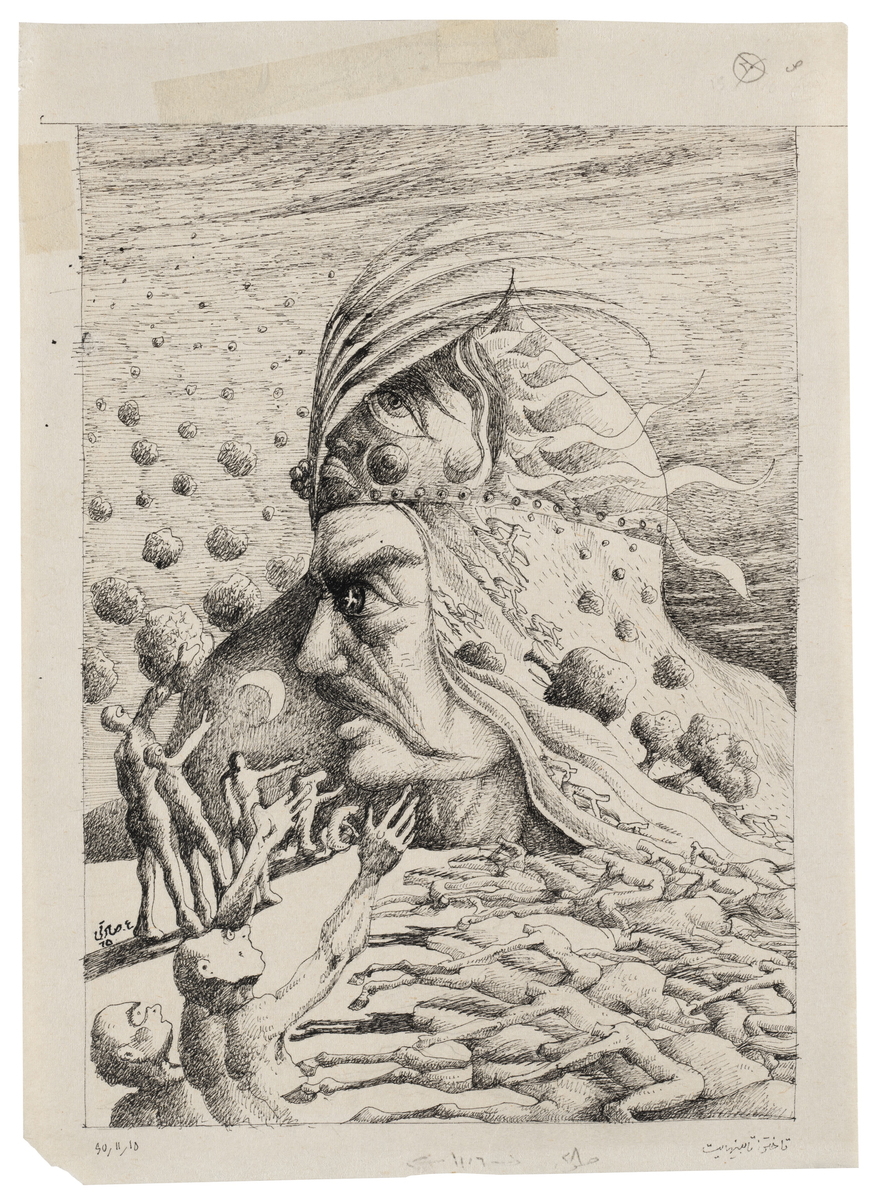
- 1937Born
Ali Akbar Sadeghi is born in Tehran on 22 November 1937.
- 1940sThe storytellers
He grows up watching naqqali and pardeh-khani, the coffeehouse storytelling performed in front of large painted canvases. He says it shaped everything he made after.
- 1945A brother
At eight he loses his five-year-old brother, Ali Asghar, to typhoid.
- 1946The nails
At nine he spends a summer in a carpentry shop straightening bent nails. Decades later the nails come back, in his Nails series.
- 1950sFirst lessons
He has painted since he was five. At secondary school he learns watercolor from Avak Hayrapetian, and works in a shop selling art supplies.
II 1958 to 1970
Fine Arts and trades
Art school by day, a working graphic artist by night: film posters, packaging, book covers and stained glass.
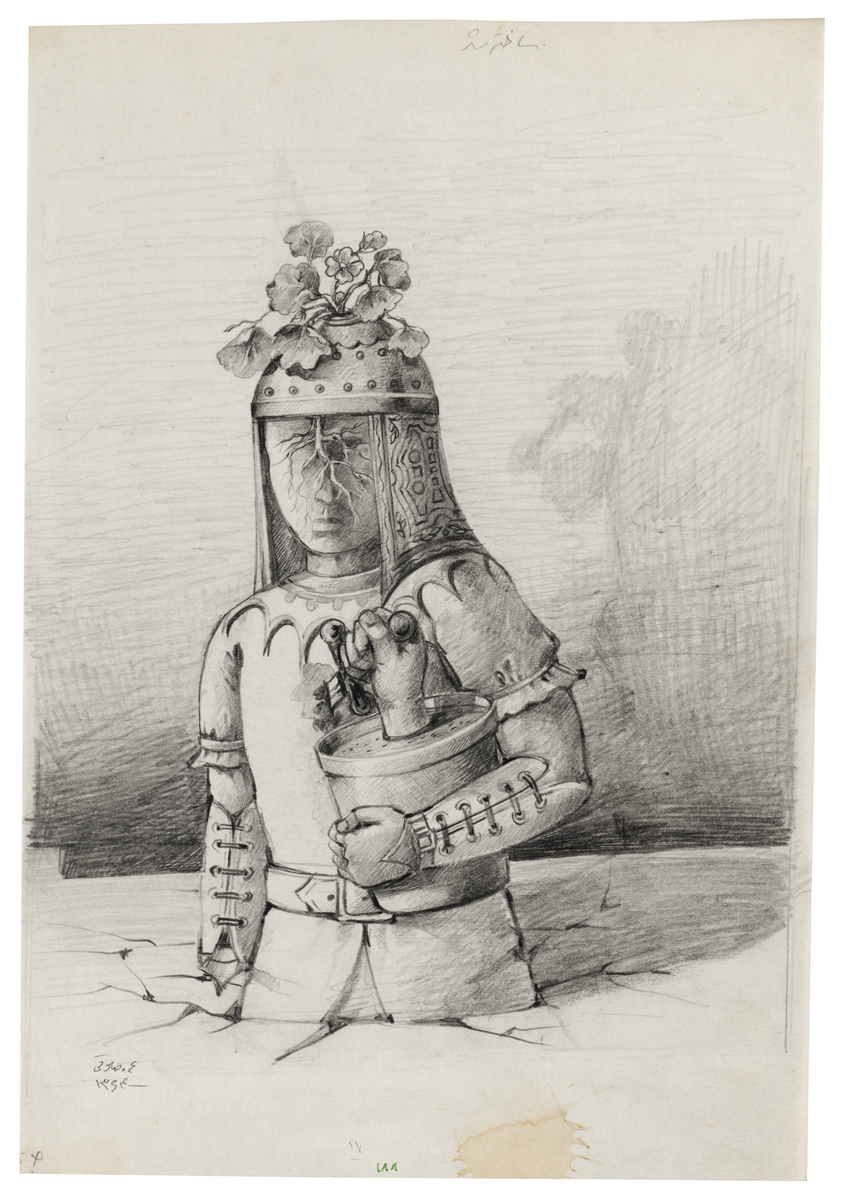
- 1958Faculty of Fine Arts
He enters the Faculty of Fine Arts at the University of Tehran and starts painting in oil.
Some sources give 1959 - 1959Stained glass
He develops his own Iranian way of making stained glass, vitray.
- 1960sPosters and covers
Film posters, advertising, packaging and book covers. He also teaches painting at a high school.
- 1969Degree
He receives his BA from the Faculty of Fine Arts.
One 2008 article says he graduated in 1958
III 1970 to 1977
The films
At Kanoon, Iran's institute for children's culture, he taught himself animation and made films that won prizes from Berlin to Chicago.
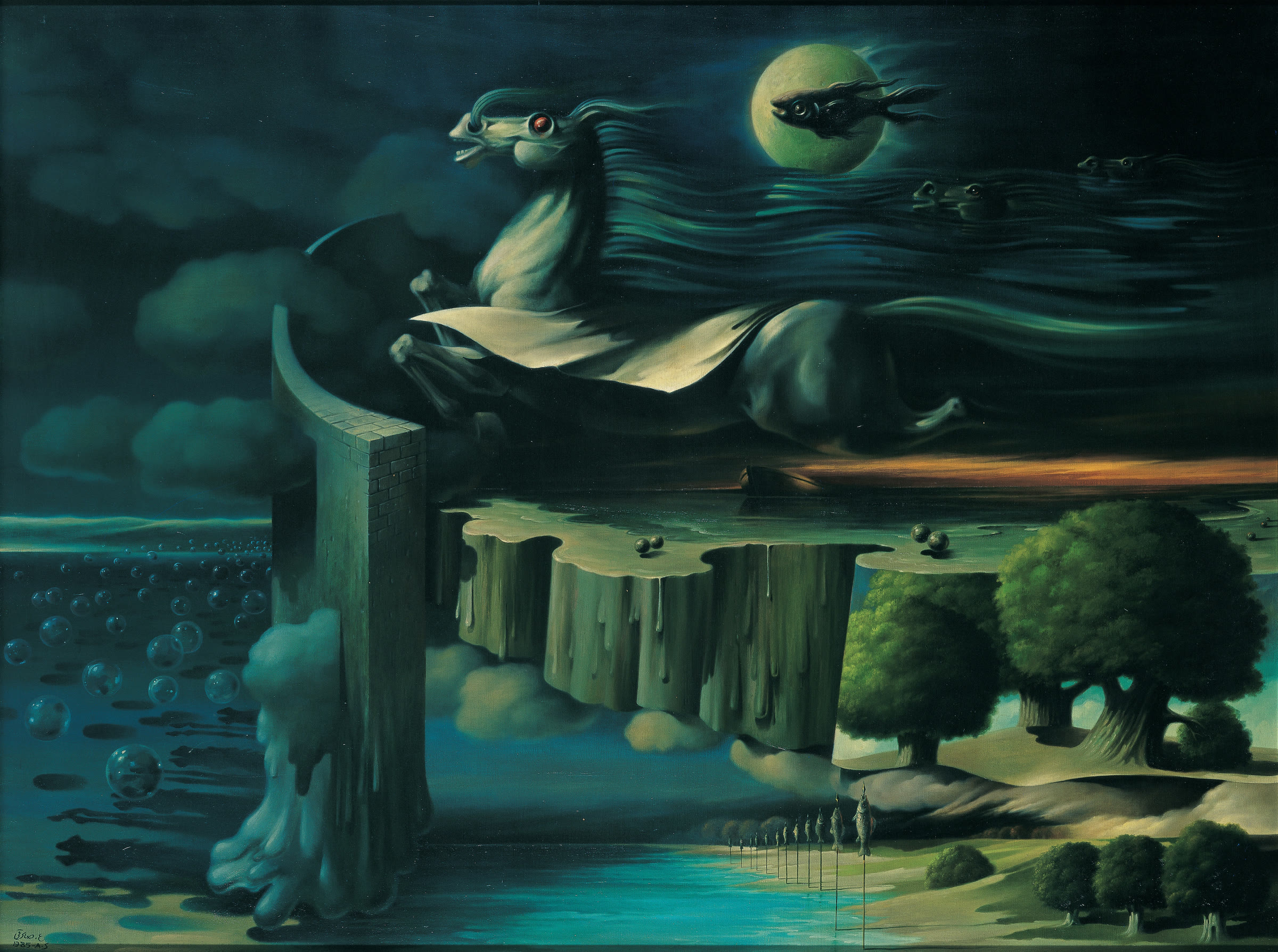
- 1970Hero of Champions
His illustrations for Pahlevan-e Pahlevanan win first prize for the best illustrations in Asia.
- 1971Joins Kanoon
He joins the Institute for the Intellectual Development of Children and Young Adults. He has no animation training and learns, he says, through intuition and discovery.
- 1971Seven Cities
Haft Shahr, about fifteen minutes, after Attar's poem, with Hafez read by Ahmad Shamlou.
- 1972Golbaran (Flowers Storm)
Gold plaque at the Tehran children's film festival, then shown at Tampere, Columbus and beyond.
- 1973Boasting
Man Anam Ke, his first surrealist experiment. It wins a Gandhi Peace Prize at the 1974 Berlin festival.
Some sources date it 1972 - 1974The Rook
Rokh, about ten minutes: plaques at Krakow, the Virgin Islands and Chicago.
One source dates it 1975 - 1975Malek Khorshid
Painted straight onto the pages of a lithographed book. Honorary diploma in Paris, 1977.
- 1970sChildren's books
Gordafarid, Let's Play Chess, The Voyages of Sindbad and more for Kanoon. Contemplation is the Best Worship wins first prize among Asian illustrators in 1978 and at Leipzig in 1980.
- 1977Zal and Simorgh
Written, designed and directed by him. The same year he stops making films to paint full time.
“My art is a combination of miniature painting, lithography, and coffeehouse painting.”Ali Akbar Sadeghi · Encyclopaedia Iranica, Cinema
IV 1977 to 1989
The painter
Faceless soldiers, Mona Lisa with a moustache, heroes who are also victims. War sits at the center of his painting.
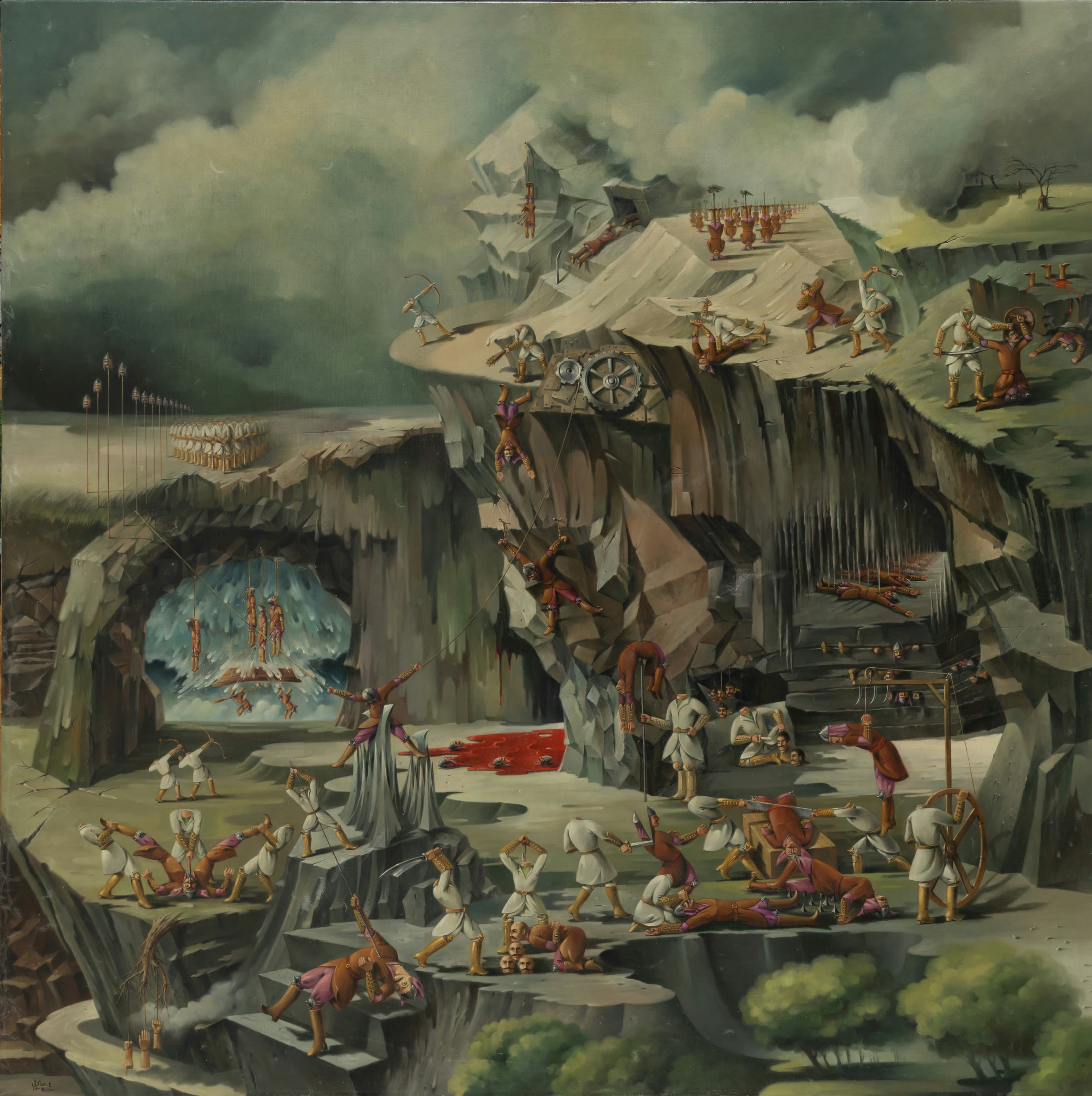
- 1979+Painting first
After the revolution he turns to painting full time.
- 1981Moustache
The Mona Lisa, with a moustache, fights beside miniature soldiers.
- 1980sMyth and Math
Battlefields of tiny, faceless soldiers, their faces replaced by daggers, swords and flowers. The foundation describes the series as painted during the Iran–Iraq War. It continues in Parallel (1983), Plus Infinity (1992) and Array (1998).
- 1985Graphic designers' prize
First prize at the first exhibition of Iranian graphic designers.
- 1987TMoCA
Group shows at the Tehran Museum of Contemporary Art, in 1987 and 1989.
- 1988Switzerland
A solo show in La Chaux-de-Fonds.
“In my paintings both the loser and the winner are the same.”Ali Akbar Sadeghi · This Orient, studio visit
V 1989 to 2005
Sabz Gallery and poems
He opens his own gallery, writes poetry, and goes through a silence before coming back to film.
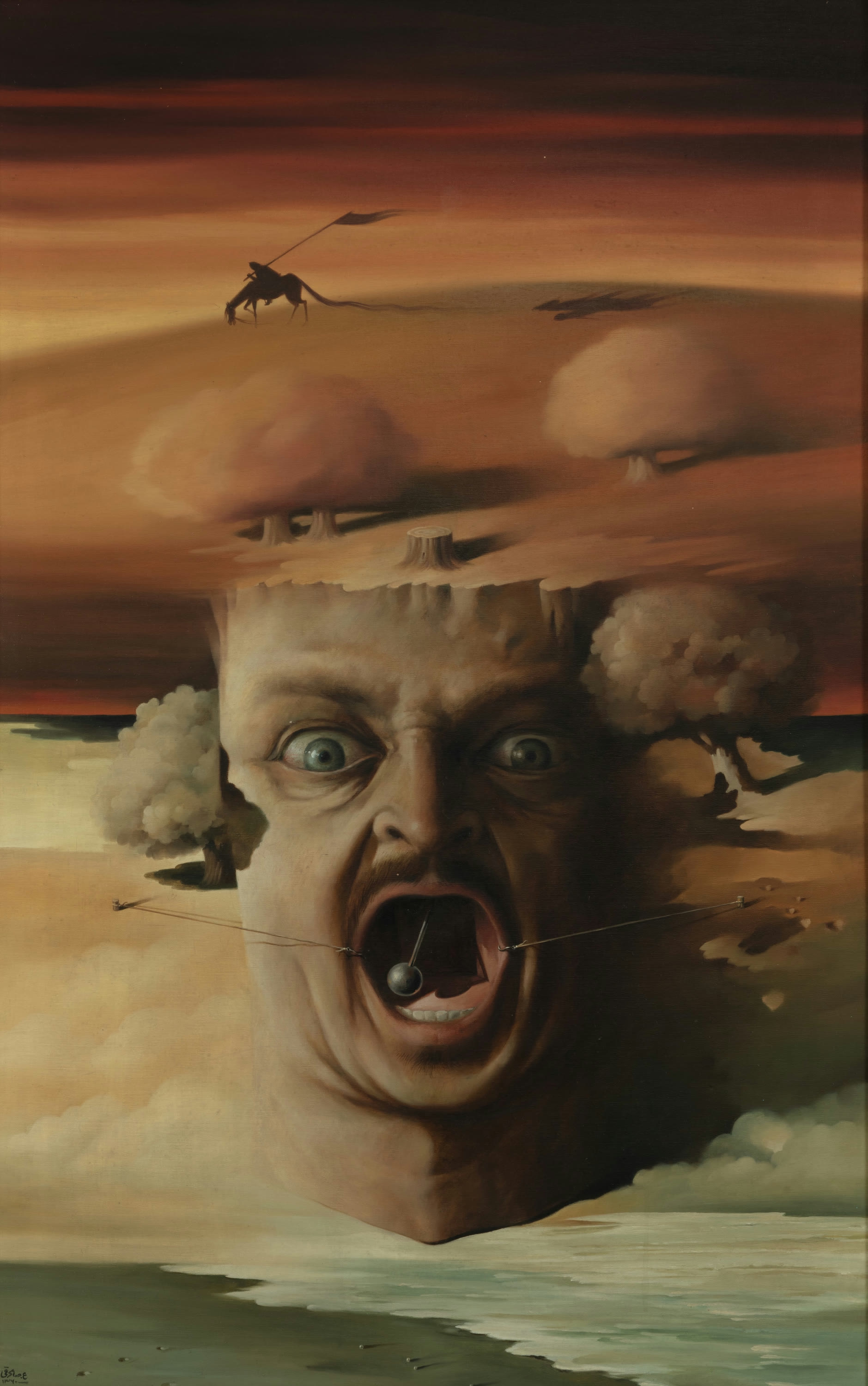
- 1989Sabz Gallery
He founds Sabz (Green) Gallery in Tehran. It runs until 2003 and holds many of his solo shows.
- 1991Zamzameha
A book of his poems. Kanoon honors him at its 25th anniversary for his films and illustration.
- c. 2004A silence
A deep depression stops him painting. He writes poetry instead.
- 2005Coalition
Etelaf, a film he writes, edits and animates himself. A retrospective opens at Aria Gallery, Tehran.
VI 2008 to 2019
Return to the world
Dubai, Istanbul, Abu Dhabi, Singapore, and at home the retrospective that called him the father of Iranian surrealism.
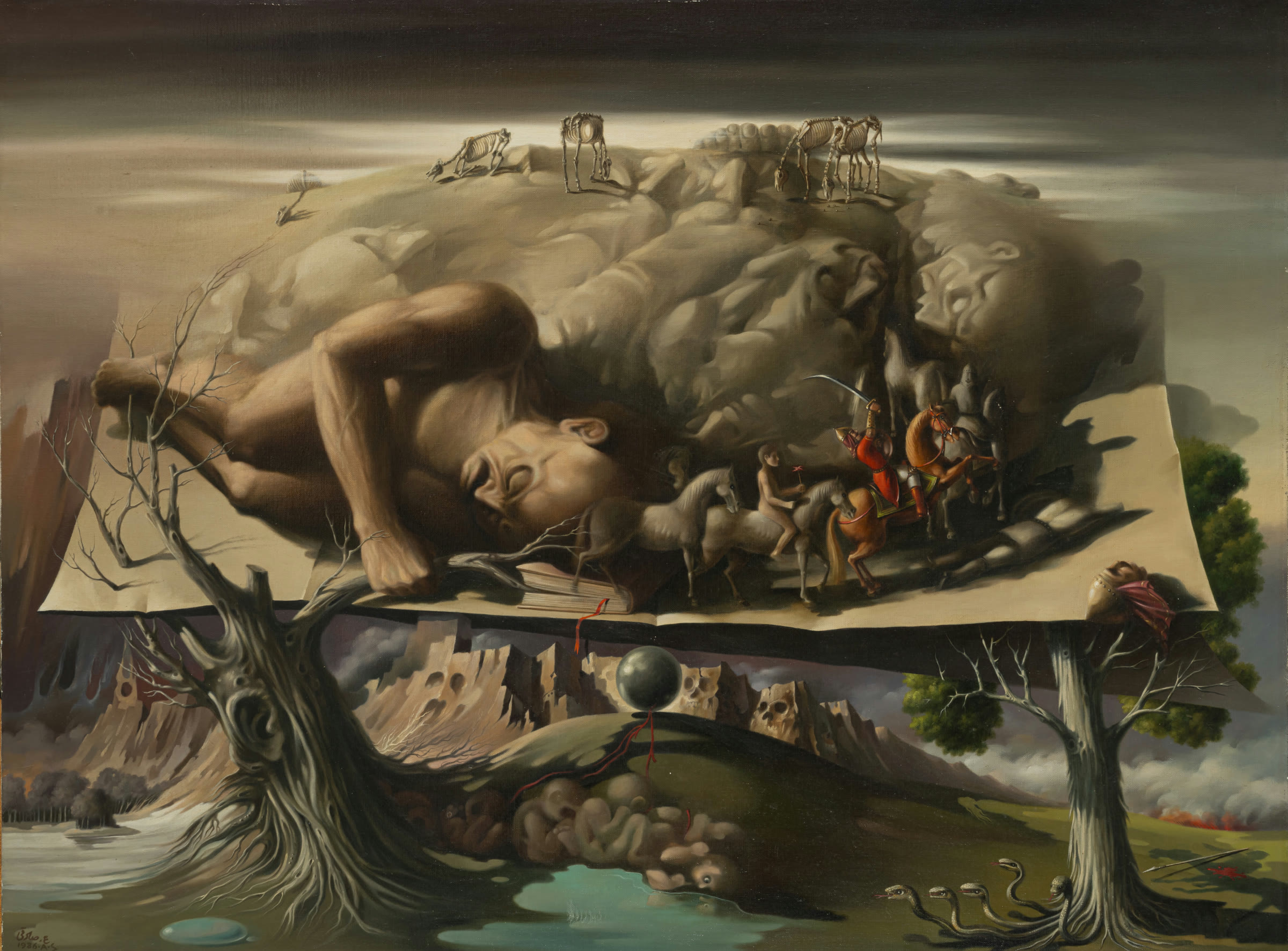
- 2008Euphoria
His first show in Dubai. He also makes the Nails cactus pots, back to the nails of his childhood summer.
- 2009An enduring figure
Iran's Ministry of Culture names him an outstanding cultural figure.
Sources give 2008 or 2009 - 2014A life in three volumes
With Ali Bakhtiari he begins a three-volume book on his life and work.
- 2015Lost in Fame
The series includes Munch. He shows at Contemporary Istanbul, and at Abu Dhabi Art in 2016.
- 2018A Retrospective
The Tehran Museum of Contemporary Art, 28 January to 14 April: painting, illustration, poetry, sculpture, stained glass and animation.
One source says 2017 (Persian year 1396) - 2019Singapore Biennale
His work joins the Singapore Biennale. It is in the collections of the British Museum, LACMA and TMoCA.
“In my opinion I'm a dreamer and I portray what I dream.”Ali Akbar Sadeghi · This Orient, studio visit
VII 2020 to today
Holy Demons
Crowned, chained creatures with speedometers for eyes, a documentary about his life, and a new foundation.
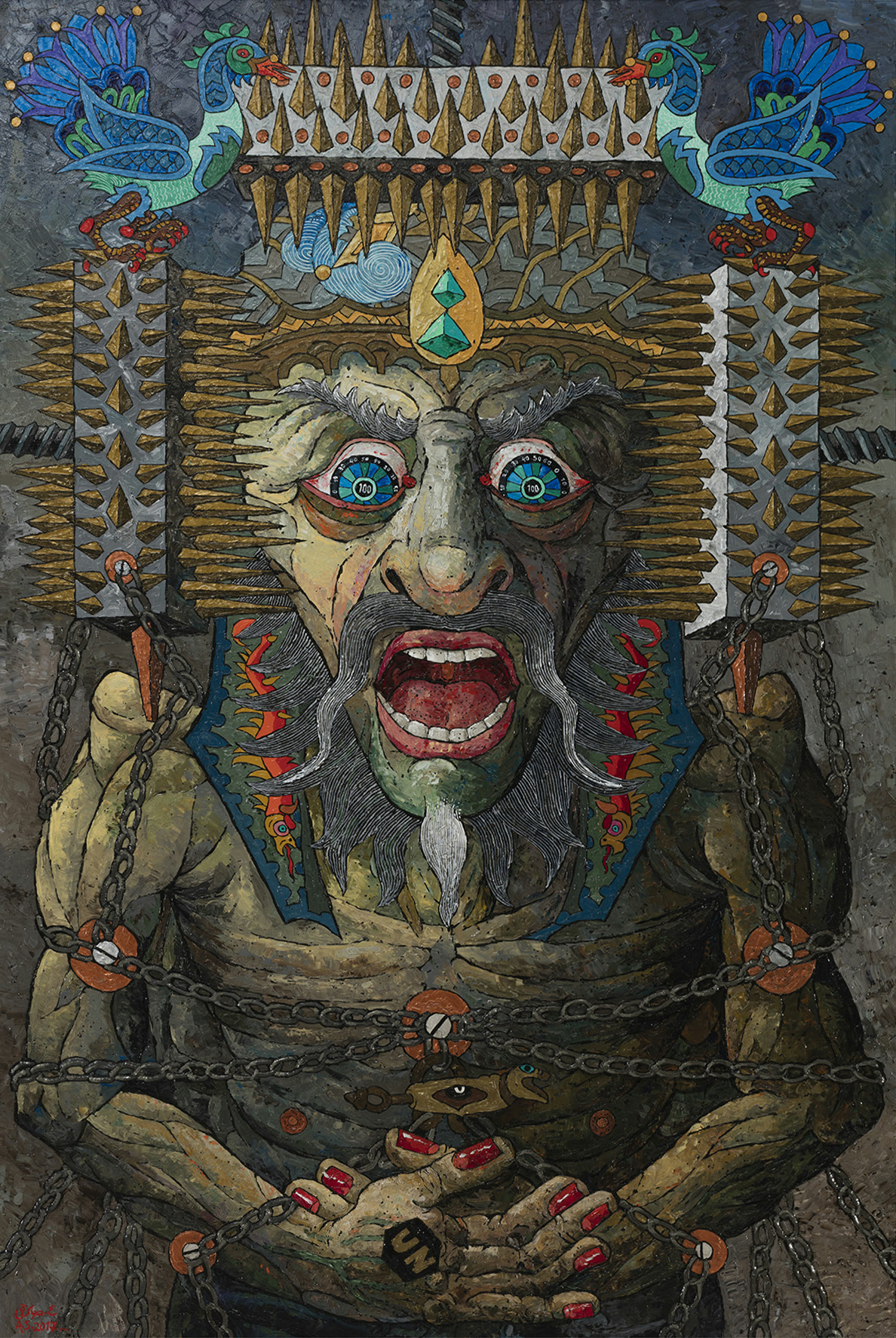
- 2022Mad
A solo show at Parallel Circuit, and Mirrored Reflections at TMoCA.
- 2024Facing the Rook
Sam Kalantari's documentary about him wins the Silver St. George for best documentary at the 46th Moscow International Film Festival, then opens in New York.
- 2025Akbar, Recent Ten Years
Dastan's Basement, Tehran. Then From Paper to Canvas at Hoor Gallery, and Art Basel Miami Beach.
- 2025Holy Demons
Iranshahr Gallery, Tehran: the hand-printed book with m.m.bookly and the first sculpture of the series, according to the foundation. The show travels to Shiraz.
- 2026By Ali Akbar Khan's Hand
At Inja and Bazdid galleries. With Dastan Gallery at Frieze Los Angeles, London and Abu Dhabi.
- TodayA street and a foundation
A Tehran street sign carries his name, unveiled by him, as filmed by the foundation. He still paints in his studio in north Tehran.
Date to confirm
“Artists might not be able to change the world. But I want to make my audience think.”Ali Akbar Sadeghi · Middle East Eye, 2018
05 Visit
He still paints
what he dreams.
Sources